
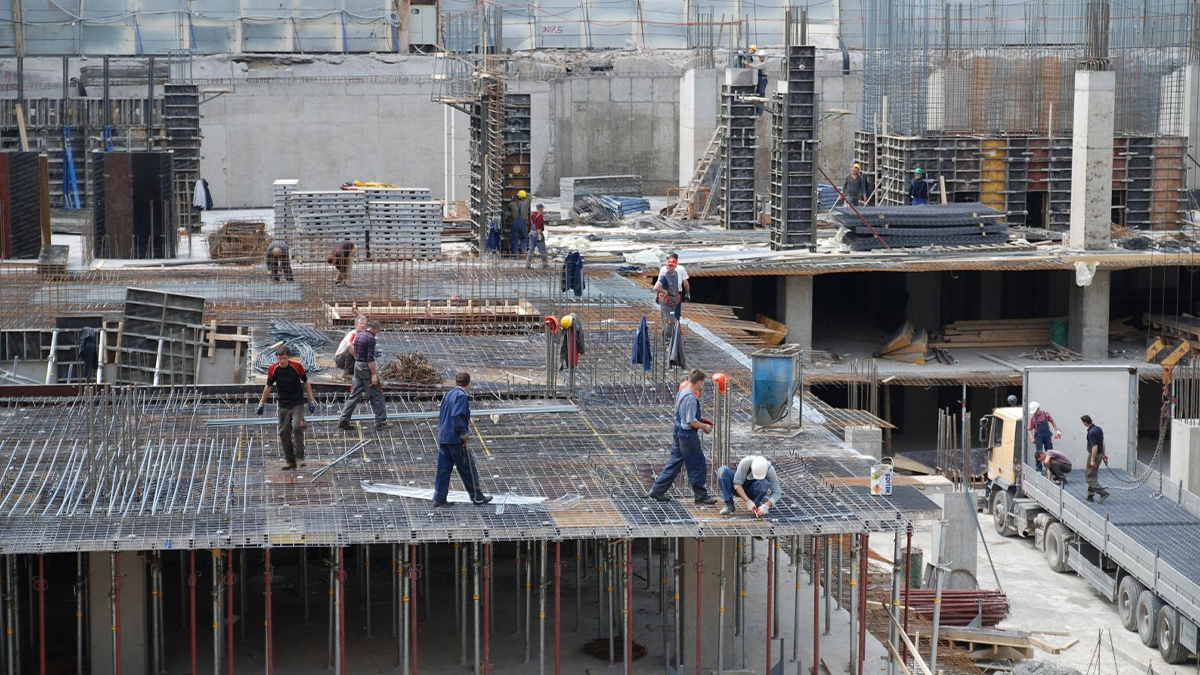
Do you know that choosing the right construction method can significantly impact your project timeline, cost, and future scalability? While traditional RCC construction has been the backbone of infrastructure in India for decades, modern alternatives like Pre-Engineered Buildings (PEBs) are rapidly transforming how factories, warehouses, and industrial sheds are built, especially in fast-growing states like Gujarat.
If you’re planning an industrial or commercial structure and trying to decide between PEB construction in Ahmedabad or conventional methods, this detailed comparison will help you make an informed, future-proof decision for sure.
What is PEB (Pre-Engineered Building)?

Pre-Engineered Buildings (PEBs) are steel structures manufactured in a controlled factory environment and then assembled at the construction site. These buildings are custom-designed using advanced software to suit your project’s exact dimensions, load requirements, and functional needs.
PEBs are widely used for:
- Warehouses
- Manufacturing plants
- Cold storage units
- Logistics hubs
- Industrial sheds
Thanks to their speed, flexibility, and cost-effectiveness, PEBs are the preferred choice for many businesses working with a PEB manufacturer in Ahmedabad, Gujarat.
What is Traditional Construction?

Traditional or RCC construction uses on-site casting of concrete structures with steel reinforcement. This method relies heavily on manual labor, site curing, and formwork. While it’s still common for residential, commercial, and institutional buildings, it tends to be slower and less adaptable compared to modern steel-based alternatives.
PEB vs Traditional Construction: Side-by-Side Comparison
| Feature | PEB Construction | Traditional RCC Construction |
| Speed | Fast (30–60% quicker) | Time-consuming |
| Cost Efficiency | Predictable and lower in large-scale builds | Prone to cost overruns |
| Structural Weight | Lightweight | Heavy |
| Customization | High (modular design) | Limited without high cost |
| Labor Dependency | Minimal | High |
| Weather Dependency | Less affected | Often delayed due to rain/heat |
| Sustainability | Recyclable steel, lower waste | Higher environmental impact |
| Maintenance | Easier, long-lasting paint finish | Can require repairs/cracks over time |
Advantages of PEB Construction for Industrial Projects
- Faster Project Delivery
PEB structures can be delivered 30–50% faster than conventional buildings, perfect for time-sensitive projects. - Design Flexibility
PEBs allow for long spans without internal columns, ideal for open floor plans like warehouses and production units. - Lower Foundation Requirements
Lighter structures reduce the load on soil, cutting down on excavation and civil work. - Expansion-Friendly
Adding bays or extending your shed later is easier and more affordable with steel-based systems. - Factory-Controlled Quality
Fabrication in a controlled environment ensures precision, better welding, and consistent material quality. - Sustainability
PEBs use recyclable steel and generate minimal site waste, supporting green building goals.
When Traditional Construction Still Makes Sense
While PEB is a modern marvel, traditional construction is still a good fit in certain scenarios:
- Multi-storey residential apartments
- Institutional buildings with complex interiors
- Projects with unique architectural aesthetics
- Areas with extremely low labor costs and no urgency
Why Gujarat Businesses Are Choosing PEB Over RCC
With cities like Ahmedabad, Vadodara, Rajkot, and Surat emerging as industrial powerhouses, the need for rapid infrastructure development is higher than ever. Businesses in Gujarat increasingly prefer PEB construction in Ahmedabad due to:
- Shorter lead times
- Lower project costs
- Minimal site disruption
- Future expansion flexibility
In response to this demand, several established PEB companies in Ahmedabad, Gujarat, have emerged, offering turnkey solutions from design and fabrication to on-site erection. These companies, including trusted steel structural manufacturers in Ahmedabad, are playing a vital role in reshaping Gujarat’s industrial skyline.
So, Which One Should You Choose?
The right construction method depends on:
- Project timeline
- Type of structure
- Future scalability
- Budget
- Site conditions
For fast, durable, and flexible industrial structures like factories, cold storage, warehouses, and large workshops, PEB is the smarter, future-ready choice.
On the other hand, for complex, multi-level or highly aesthetic structures, traditional construction still holds its ground.
Final Thoughts: Build Smart, Build Strong
As industrial growth accelerates across Gujarat, especially in Ahmedabad, more businesses are turning to steel-based construction for its reliability and efficiency. Whether you’re planning a logistics park, a manufacturing unit, or a custom warehouse, consider working with an experienced PEB structure manufacturer in Gujarat, like SunSky Steel Infra LLP, who can deliver value through quality, engineering precision, and timely execution.
A well-constructed building is more than just a structure; it’s an asset for decades to come.
FAQs
Is PEB construction more expensive than traditional methods?
While the upfront cost of PEB may be similar or slightly higher in some cases, it results in significant savings through faster completion, reduced labor, and lower maintenance.
Can PEBs be customized for specific industry needs?
Absolutely. PEBs are highly flexible and can be tailored to meet specific operational layouts, equipment sizes, ventilation requirements, and load capacities.
How long does it take to complete a PEB project in Ahmedabad?
Depending on the project size, PEBs can be completed in as little as 45–90 days, including fabrication and erection, much faster than traditional construction.
